
Why We Build on Custom Next.js for Malaysian SMEs
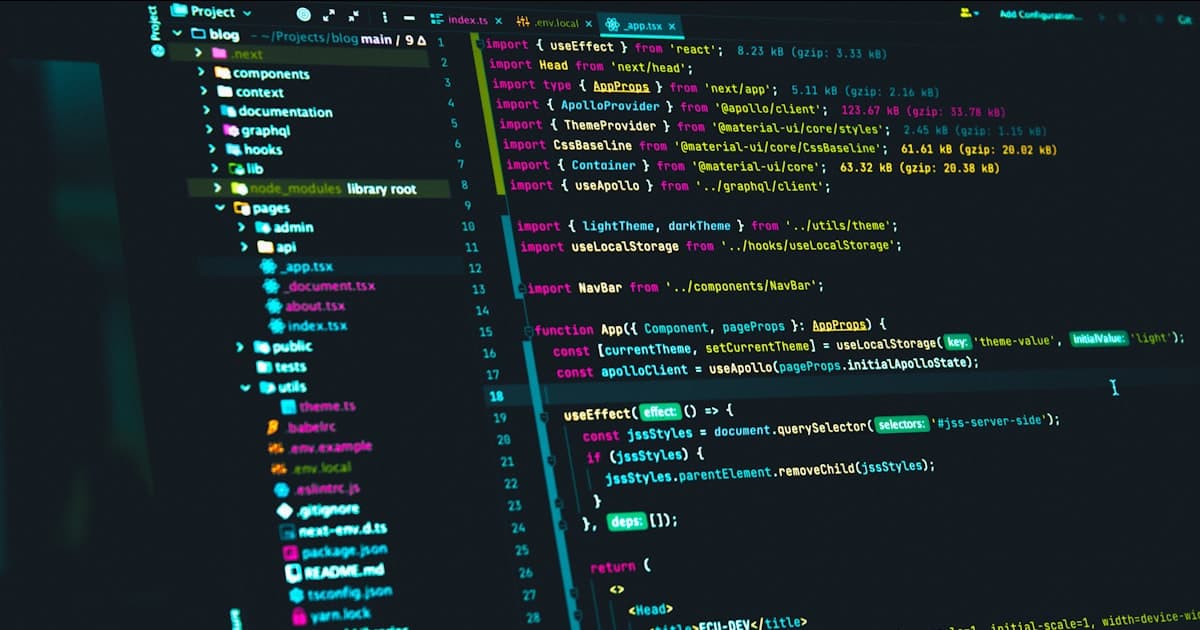
If you are a Malaysian SME owner shopping for a website, you have probably hit the same fork in the road: pay a small monthly fee for a drag-and-drop builder or an off-the-shelf WordPress theme, or spend more upfront on something custom-built. The builder route looks cheaper and faster, and sometimes it genuinely is the right call — we say so honestly further down this page. But for most businesses that plan to be around in five years, we believe custom code is the better investment, and this article explains why.
At Stacky, every site we build is custom-coded in Next.js. No WordPress, no page builders, no themes bought off a marketplace. That is not a fashionable preference; it is a practical decision about speed, security, and long-term cost. Here is the reasoning, in plain language.
What Next.js actually is
Next.js is a framework built on top of React, the open-source library that powers the interfaces of many of the world's largest websites. Where plain React runs mostly in the visitor's browser, Next.js adds server rendering: the page is assembled on the server and arrives at the phone or laptop already built. The practical result is that visitors see your content quickly instead of staring at a blank screen while scripts load.
Next.js is used by major global companies across e-commerce, media, and software, and it is actively maintained by a large open-source community. It is not an obscure tool we picked to be different — it is one of the most widely adopted ways to build modern websites today. Our Next.js development in Malaysia page covers the technical detail if you want it; the short version is that it lets a small team ship sites that are fast, stable, and easy to grow.
Built for speed and Core Web Vitals
Google measures real-world performance with three numbers called Core Web Vitals. Largest Contentful Paint (LCP) asks how quickly the main content appears. Interaction to Next Paint (INP) asks how quickly the page responds when someone taps a button. Cumulative Layout Shift (CLS) asks whether things jump around while loading — the annoyance that makes you tap the wrong link. Google uses these signals in ranking, and studies consistently show that slower pages lose visitors before they ever see your offer.
This matters even more in Malaysia, where most browsing happens on mobile, often on 4G connections of uneven quality. A heavy theme stacked with plugins might feel fine on office Wi-Fi and fall apart on a phone in a moving Grab. Because Next.js renders on the server and only ships the code a page actually needs, our builds start from a fast baseline, and we optimise from there towards our 95+ Lighthouse target. We have written more about website speed and Google ranking if you want to go deeper.
A design that is yours
Templates are, by definition, shared. Buy a popular theme and you will eventually spot your own website wearing someone else's logo. Custom code means the design starts from your business, not from a demo file. That gives you:
- ●A layout planned around your actual content and customer journey, not boxes you have to fill in
- ●Typography, colours, and spacing chosen for your brand rather than inherited from a theme
- ●No unused features bloating the page — every element on the site earns its place
- ●The freedom to change anything later, because no theme licence or builder limitation stands in the way
Fewer security headaches
A typical WordPress site relies on a stack of third-party plugins — for forms, galleries, SEO, caching, backups. Every plugin is code written by someone else, updated (or abandoned) on their schedule, and each one widens the attack surface. Security researchers consistently report that most WordPress compromises trace back to plugins and themes rather than the core software, which is why "keep everything updated" becomes a permanent chore.
A custom Next.js site simply has less to attack. There is no plugin marketplace, no admin login page being probed by bots, and far fewer moving parts. We still handle updates, backups, and monitoring through our care plans, but the starting position is a much smaller surface — maintenance becomes routine housekeeping rather than firefighting. And if you are already running WordPress and want out, our WordPress to Next.js conversion service rebuilds your site as custom code from RM3,000.
Easy editing without the bloat
The honest historical advantage of WordPress was the editing screen: non-technical owners could update text themselves. Custom code has caught up. We pair our builds with a headless CMS — a clean dashboard where you update text, photos, prices, and blog posts, while the fast Next.js site handles everything your visitors see. You get the convenience without inheriting the plugin stack, and you cannot accidentally break the layout while editing a paragraph.
SEO advantages that compound
Search engines reward pages that load fast, read cleanly, and describe themselves properly. Custom Next.js helps on all three fronts. Server rendering means Google receives complete, crawlable HTML rather than an empty shell waiting for JavaScript. We hand-write the markup, so headings, meta tags, and structured data (schema) are exactly what they should be — not whatever a theme happens to output. And because the pages are quick, the speed signals discussed above work for you instead of against you. None of this guarantees rankings — nothing does — but it removes the technical handbrakes that hold many SME sites back.
Lower long-term cost than it looks
Custom builds cost more upfront — our pricing is public, starting at RM1,500 for a simple site and RM3,500 for our most popular business package. But the lifetime picture is often cheaper than the builder route. Next.js sites are lightweight and largely pre-rendered, so hosting is inexpensive; every package includes 3 months of free hosting, and our care plans start at RM50 per month covering hosting, security updates, backups, and support. There are no theme licences, no premium plugin renewals, and no builder subscription that quietly climbs each year. And because the site is genuinely yours — code and all — you are never locked into a platform you have outgrown.
When a template is enough
We would rather be straight with you than win every job. If you need a one-page site for a short-lived event, if your budget is genuinely a few hundred ringgit, or if you just want to test an idea before committing to it, a website builder is a perfectly sensible choice. The same goes if you enjoy tinkering and plan to rearrange the design yourself every week. Custom development earns its keep when the website is part of how you win customers — when speed, credibility, and search visibility affect revenue. If that is not you yet, take the cheaper option and come back when it is.
If you are weighing up the two routes for your business, talk to us. We are a founder-led studio in Kuala Lumpur, SSM-registered and WhatsApp-friendly, and we will tell you honestly which option fits — even if the answer is not us. Request a free quote and you will receive a clear, itemised proposal within 1 business day, with no hidden fees and ringgit pricing you can actually plan around.